The 2026 Grain Season – Seeding in full swing and a very early finish in sight
The majority of the grainbelt has received further useful rain in the last few weeks to keep the seeders going. A big proportion of the planned crop will be in the ground by mid-May with most of this being sown into moisture.
Canola emergence varies depending on which side of the rain growers were on at sowing. Canola sown prior to rainfall events is very good and canola sown after rainfall events in late March and early April, which suffered patchy emergence, has now evened up. Cereal emergence is mostly very good across the state.
This will be the earliest start, and finish to planting since the very high yielding year in 2022 and has provided a welcome boost in confidence across the grain industry which has been severely knocked about by the conflict in the Middle East. Even though input costs are high, they have not blown out as much as was initially predicted prior to the start of seeding. The early sowing opportunity for canola has driven renewed confidence as it is the most profitable crop grown in WA, particularly when it emerges before mid-May, which will be the case for most crops this year. .
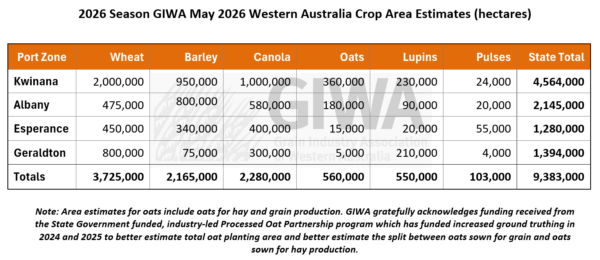
The cereals are a big question mark, particularly wheat, as margins are slim on current grain prices assuming average yields. As a result of this wheat area is down quite a bit from 2025. Wheat area as a percentage of the total planted area has been declining for some time. In the 2016 growing season, wheat area was 59.2 per cent of the total area planted and this year, it is going to be closer to 40 per cent. All cropping zones in WA will have a reduction in wheat area planted relative to the 2025 cropping season, which is likely to end up being about a 14 per cent reduction in total wheat area.
This decrease in wheat area has been taken up by barley and canola over the last ten years, with barley area up due to it currently being more profitable than wheat driven by price and barley’s yield benefit over wheat. The projected barley area in 2016 has increased from 16.6 per cent of the total crop to 23.2 per cent. Canola hectares in 2026 will be the largest area planted on record and have increased from 15.5 per cent of the total cropped area over the last ten years to a projected 24.5 per cent this year.
The early sown crops are at risk at the back end of the season by being more prone to frost. However, most growers are continuing to capitalise on existing moisture knowing that if they dodge frost events, a longer growing season will likely lead to higher yields which are needed to turn a profit. The risk is worth it.
There is a bit of a reluctance by growers to slow down seeding operations as the forward climate projections are for a hot dry finish to the growing season. The majority of climate models agree on this and whenever they align, it signifies that what is forecast is more likely to occur. Climate models are forecasting both above average minimum temperatures and maximum temperatures in the spring this year. WA has been experiencing above-average minimum temperatures for some time, which has partly contributed to very high tonnages. At the same time, there has been an absence of prolonged periods of high maximum temperatures in recent years. Higher temperatures help to reduce frost risk, but historically heat shock can shave off more tonnes of grain at the end of the season than frost.
While there is a long way to go with seeding still underway, at this stage of the season the sentiment is good and one of relief thanks to the early start of the season.
Seasonal Outlook
Ian Foster, Department of Primary Industries and Regional Development

Climate summary
Rainfall
April rainfall was near average for most cropping areas, with areas around Albany being notably dry while the Esperance region was wetter than normal. Combined with tropical rain in February and March, soil water stores are now near average or better in many areas (Figure 1). Some rain is predicted to occur in the second half of May across cropping areas; however, only small totals are expected away from the coast.
Forecast
Climate models indicate a likely development of an El Nino event in the Pacific Ocean from about May. There is also some indication of a positive Indian Ocean Dipole event, although there is less confidence at this time of year. These events historically limit winter and spring rainfall over much of Australia.
Reliability of these forecasts improves from May onwards.
The Bureau of Meteorology’s seasonal outlook for June to August 2026 is indicating below average rainfall being more likely for the wider southwest of WA (Figure 2). This continues into spring and is likely driven by forecast higher than normal atmospheric pressure in the southern Indian Ocean and the Southern Ocean. International models have a similar outlook.
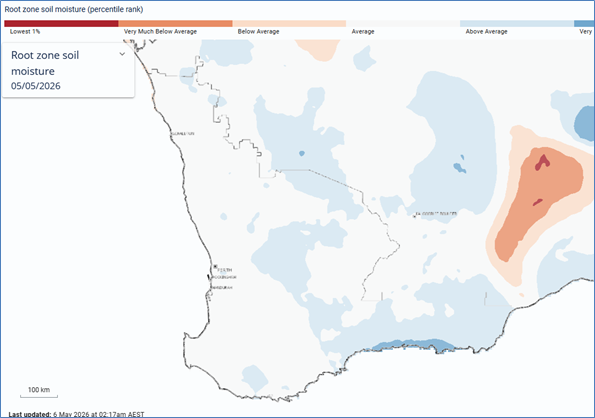
Figure 1: Estimated root zone soil water percentiles 5 May 2026. Source: Bureau of Meteorology (2026).
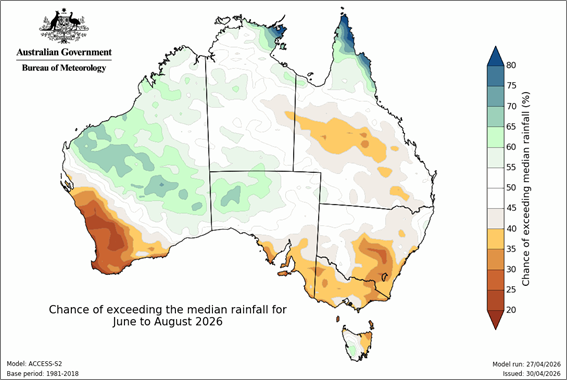
Figure 2: Rainfall outlook for June to August 2026. Source: Bureau of Meteorology (2026).
Temperature
Temperatures for February to April have been near average. Seasonal forecasts indicate June to August remains likely to be notably warmer than average. Outlooks for spring also indicate higher temperatures, leading to an increased risk of daytime heat events. There are competing influences on frost risk, with drier conditions increasing the risk via clear sky nights, against the background warmth of spring projections. Actual occurrence remains determined by weather conditions and landscape.
Additional information is available from:
- DPIRD: Weather stations
- DPIRD: Soil Water Tool
- DPIRD Rainfall to Date Tool
- BoM: Rainfall totals for cool season 2025/26
- BoM: Rainfall outlook for the next week
- BoM: Seasonal Rainfall Outlook
- BoM: Australian Water Outlook
Geraldton Zone
Seeding is going flat out in the region following rain ten days ago. The rain was strippy and ranged from 2–3 mm to 20 mm. In the wetter areas the wheat is being sown into good moisture and will germinate, whilst the drier areas are being sown dry. By the end of next week those growers sowing into moisture will be finished and those sowing dry will have 70–80 per cent of their planned crop in the ground. There isn’t a lot of appetite to sow crops in June this year and if it doesn’t rain in the next three weeks, some of the area currently planned for wheat but which hasn’t been sown will be fallowed instead.
About 50 per cent of the canola area is up and looking good, with the remainder ready to pop out of the ground when it rains. Wheat sown into moisture is up and around two to three leaf. This is much earlier than normal as growers have opted to use growing season length to compensate for the yield they expected to lose in their wheat from reduced fertiliser inputs. This does bring some of the southern areas into frost risk, although growers have sown their canola, lupins and barley in the lower lying areas first to partly mitigate against this.
The canola, lupin and barley areas are up from 2025. The total area is currently estimated to be down about 100,000 hectares from the large area planted last year. However, this could yet change if the area receives rain in the next three weeks.
Mice are hammering the emerged canola crops with some areas being baited up to three times.
Kwinana Zone
Kwinana North Midlands
The early rain plus follow up rain in the last few weeks has kept seeders going, sowing into good levels of moisture. Some growers held back planting following the cyclone in March and this has paid off as subsequent rainfall events have ensured emergence with all crops is very good.
Most growers are finishing up their barley and are now onto the longer season wheat varieties. Good subsoil moisture levels and now milder temperatures will allow the remaining crop to be sown into moisture.
A bonus this year has been the chance to get a couple of knockdown sprays on to take the pressure off the in-crop applications. The amount of winter weeds germinating in April was more than normal and has provided an excellent knockdown opportunity, which does not happen very often in these northern regions of the state.
Kwinana South
Apart from the southwestern area, most of the region has had several rainfall events now and growers will finish most of their cropping programs into moisture. All the canola, lupins and oats are sown and most of the barley will be in the ground by the end of this week. Planting of longer season wheats are underway in the eastern areas. Growers are planting wheat earlier than normal trying to make use of the moisture that is there now. The lower lying areas are being left until the end of programs to mitigate against frost risk later in the year.
Canola density was down a little in the early sown paddocks due to high temperatures at emergence, but most have thickened up now from the follow up rain.
Some of the less profitable cereal paddocks that had been earmarked to be left out are now likely to go in as the early break has increased the chances of profitable yields due to the length of the growing season.
The earlier anxiety prior to the start of seeding has dropped away as input costs have not blown out as much as was feared. The early rain turned things around, giving a perfect start for the most profitable crop, canola. The continued rainfall, even though light in a lot of cases, has meant most of the crops in the region have been sown into moisture. The early sowing opportunity has not fazed many growers, and most have continued to sow irrespective of the potential consequences later in the season.
Canola area is up about ten per cent across the region from 2025 and wheat is down a little, taken up by an increase in barley area. Interestingly some of the planned swings in crop area mix ahead of planting have not occurred, particularly the expected increase in lupin area. Only about 10 per cent of growers in the region have opted for more lupins, while around 20 per cent have reduced their lupin area compared to 2025.
The expected increase in fallow area has not occurred, with growers who intended to leave paddocks out but didn’t, being roughly balanced by others not planning to but ultimately opting for some fallow. There has been a very slight increase in pasture area with some growers with sheep leaving an extra paddock to pasture rather than it being cropped. This trend is repeated across the grainbelt and reflects the renewed confidence due to the early start to the growing season and fuel and fertiliser supplies becoming more certain.
Kwinana North East
The early start to the season right across the zone has alleviated the anxiety from just a few weeks ago. The area sown to canola has increased by around 10–20 per cent from 2025 depending on where the early rains fell and the significant reduction in crop area to fallow that was expected does not look to be the case now. Most growers are opting to reduce fertiliser use rather than not crop paddocks.
There are already some canola paddocks on track for very good yields even with below average winter rainfall forecast.
Cereal planting is on track for a very early finish with many growers chasing moisture deep with both barley and wheat, opting for the security of getting crops up rather than risk sowing at the end of May or into June without having had rain over the next few weeks.
Moths have been very active for several weeks now which could pose a risk of grub damage to canola and lupin crops in the spring.
Albany Zone
Albany West
Canola is all sown and mostly up now in the region. Growers are moving onto barley and will switch over to wheat in a few weeks. There haven’t been too many changes to original seeding plans just yet apart from a few paddocks left out to pasture by those that have sheep, and an extra paddock of faba beans planted in the low-lying areas.
Growers are being very careful with input costs and those that have traditionally loaded up crops up front with nitrogen, now plan to play the season more this year by opting for several applications rather than risk too much early in the season.
Growers have been concentrating on getting good knockdown weed control and keeping paddocks bare rather than going flat out into cereals. Growers in the region have been a little more risk adverse in pushing the cereal planting dates too early due to frost risk. The region has a better chance of receiving spring rain and avoiding reductions in yield from heat shock and whilst it is likely to be an early fi
Albany South
he southwestern and coastal regions missed out on the good early falls of rain that occurred in the rest of the state and the follow up rains have been patchier in these southern regions. As a result, the canola establishment is all over the place. Some has suffered from drying out too quickly following planting and the combination of hot drying soils and in some cases liquid nitrogen toxicity has reduced canola plant numbers to a point where some paddocks and sections of paddocks have needed re-seeding.
Barley is mostly all in and some growers have started sowing wheat, which is very early for the region. The area sown to canola is very similar to 2025 and wheat area is down, substituted for barley. The interest in lupins and pulses has faded with the now improved nitrogen supply outlook. Some paddocks have gone back to pasture where growers have held or slightly increased sheep numbers.
Albany East (Lakes Region)
The Lakes region is on track to finish seeding programs earlier than normal due to the early rains across the state. Growers have held back a bit on finishing too early due to the region being historically at high risk of frosts. The forecast of a hot dry spring may reduce the risk of frost somewhat but conversely it comes with risk of poor yields due to early heat shock on maturing crops.
The area of canola has climbed again in the region driven by the early rain and canola’s profitability over cereals. Barley is the dominant cereal again this year and the area planted has increased again. The oat area has been increasing in recent years, and the early start has pushed oat area up again for both hay and grain.
Esperance Zone
It has been a dream start in the Esperance region. The good early rains have continued through April topping up the moisture profile, making it a perfect start. Canola crops are up with some at six leaf stage already, with most around two to four leaf. Barley crops are mostly around two leaf with wheat just coming through the ground.
The majority of growers have nearly finished seeding and have had to slow down so as not to have everything in so early, which increases risk of frost and sprouting. Day temperatures have cooled down recently and crops are now taking longer to emerge, which will tend to spread out maturity dates at the end of the season. No one seems to be concerned with having so much of the crop in so early. Although there are risks, most are opting for “let’s get it in” and give crops a chance to hit average yields even if nitrogen rates have to drop off a bit.
The fertiliser availability issue appears to be worse in the Esperance and Albany regions than other parts of the state and some plantings will be held up for a few weeks due to this. From a risk management perspective, this may turn out to not be a bad thing.
The crop enterprise mix change this year is similar to other areas of the state with wheat plantings down and canola and barley up. The pulse area has not gone up as much as was planned a few months ago when nitrogen supply was uncertain. With supply more likely not to be as big an issue now, growers have not ended up increasing the area of lentils, field peas and faba beans significantly.