The 2026 Grain Season – Good early season rainfall has hopes up for a reasonable year in Western Australia under the cloud of a difficult global climate
Summer and autumn rainfall from the remnants of cyclone activity further north in the state has resulted in the majority of the grain growing regions in Western Australia sitting on useful subsoil moisture reserves.
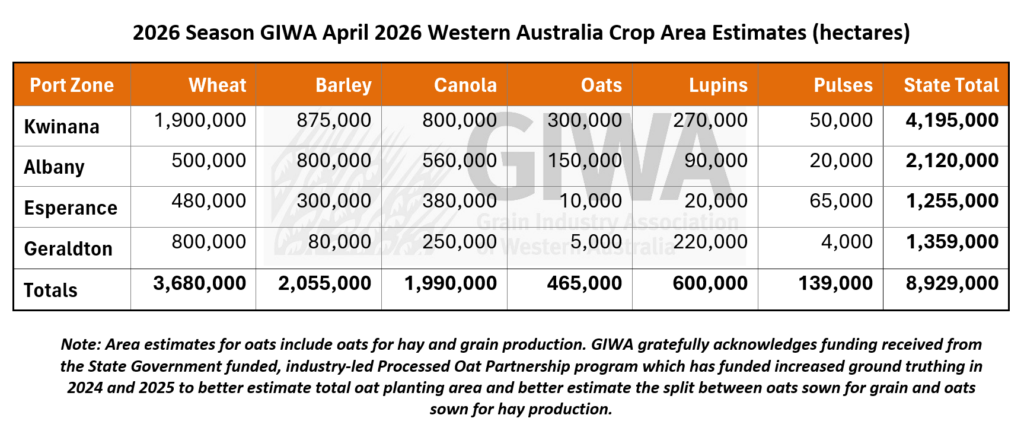
In some areas of the state more than 50 per cent of the planned canola area has been planted into moisture and has emerged. Emergence is variable ranging from very good in crops sown prior to rainfall events, to poor in crops sown following rainfall where the soil has dried too quickly before seed germination. The planned area of canola is up slightly from the 2025 cropping season and this is still likely to eventuate considering the potential profitability of canola compared to other grains and the probability of achieving above breakeven yields as a result of the early rainfall to date.
Small areas of oats and other crops have been planted, although most growers have now stopped seeding and are waiting for the topsoil to dry out to enable dry sowing to commence.
Wheat area will certainly be down on last year, replaced by barley and canola and to a lesser extent oats and lupins. Total area planted will be down from the record 9.45 million hectares planted in 2025 due to the potential of reduced profitability of all grains from reduced grain prices and increased fuel and fertiliser costs arising from the Middle East conflict. The poorer performing paddocks will be left out to fallow area or replaced by a pasture or grain legume if it fits the rotation. Growers are prioritising inputs to maximise yields and profitability on the better set up and potentially higher potential yielding paddocks over those with lower potential yields.
At this early stage of the season, most growers are sticking to subtle adjustments in cropping plans rather than making wholesale changes and are waiting to see how the seasonal and political climate unfolds over the next few months.
The majority of growers now have sufficient fuel, starter fertiliser and crop protection treatment products on hand for the seeding period. It’s the post seeding period that currently poses the most risk, particularly for nitrogen fertiliser availability and price. The fertiliser supply situation is improving which will help with final potential yields, although the combined cost blowouts of all inputs are forcing growers to scale back planned seeding programs with the less profitable paddocks being dropped out of programs.
The current cost and supply squeeze is putting a dampener on the opportunity for another high tonnage year in WA, which the widespread early rain could have provided, as crop area and yields will be constrained as growers manage risk. In saying this, well before the international scene changed, most growers were already planning to take a more risk averse approach in 2026 anyway to preserve capital following the recent good run of years.
Seasonal Outlook
Ian Foster, Department of Primary Industries and Regional Development

Seasonal Climate April 2026
Rainfall
After a summer that had offered little early rain, tropical cyclones Mitchell and Narelle brought significant rain in February and March to much of the agricultural area (Figure 1). With early April bringing rain to the Esperance region, soil water stores are now above average in many areas. January was notably warmer than average, with February and March being cooler courtesy of cyclone and thunderstorm activity. April has been warm.
Forecast
Climate models indicate a likely development of an El Nino event in the Pacific Ocean from about May. There is also some indication of a positive Indian Ocean Dipole event, although outlooks are variable at this time of year. These events historically limit winter and spring rainfall over much of Australia. Reliability of these forecasts improve from May onwards.
The Bureau of Meteorology’s seasonal outlook for May for July 2026 is indicating below average rainfall being more likely for the southwest of WA (Figure 2). This continues into August and is likely driven by forecast higher than normal atmospheric pressure in the southern Indian Ocean and the Southern Ocean. International models have a similar outlook.
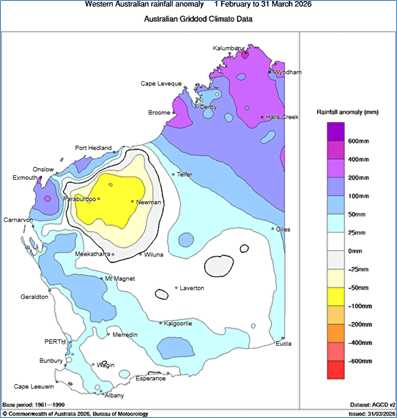
Figure 1: Rainfall anomalies for February and March 2026. Source: Bureau of Meteorology (2026).
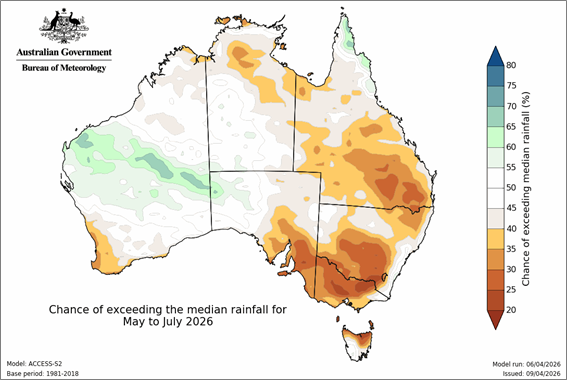
Figure 2: Rainfall outlook for May to July 2026. Source: Bureau of Meteorology (2026).
Temperature
Daytime temperatures have been well above average for the first half of April. Seasonal forecasts indicate May to July remains likely to be notably warmer than average, with an elevated risk of extreme temperatures.
Additional information is available from:
- DPIRD: Weather stations
- DPIRD: Soil Water Tool
- DPIRD Rainfall to Date Tool
- BoM: Rainfall totals for northern wet season 2025/26
- BoM: Rainfall outlook for the next week
- BoM: Seasonal Rainfall Outlook
- BoM: Australian Water Outlook
Geraldton Zone
Seeding is well underway across the Geraldton port zone, with significant areas of canola planted ahead of the recent tropical depressions. Those canola paddocks that did get planted are at 2–4 true leaf growth stage with good plant densities. Seeding has paused temporarily due to the current half-wet, half-dry conditions but will resume once conditions dry out.
The canola area in the northern wheatbelt is set to expand substantially from 2025, with many growers planning on 40–60 per cent canola in their rotations. Most of this increase in canola area will be at the expense of wheat which could contract by 25–30 per cent from 2025. The economics of canola remain attractive even with high urea prices, and the high subsoil moisture reserve is encouraging growers to back the crop.
Lupin’s area is increasing based on multi-year rotational economics, even where single season profit margins are low, with growers looking to accumulate on-farm nitrogen ahead of a potentially expensive 2027 nitrogen market. This is not just a short-term response to a cost spike; it reflects a longer-term view about the profitability of different crops and the importance of soil nitrogen management.
Fallow area is also up, particularly in more marginal country, with well-managed fallows equipped with robotic weed control showing remarkable nitrogen accumulation, in some cases up to 60 units of nitrate in the top 30 centimetres on heavier, high-organic-carbon soils. Recent soil test data following the rainfall events is showing significantly higher mineralised soil nitrogen than earlier estimates suggested.
The practical implication is that many cropping programs in the northern zone can proceed on reduced purchased nitrogen without a proportionate yield penalty, provided the season tracks to average. This accumulated nitrogen, combined with mineralisation driven by warm, moist summer conditions, means the nutrition base heading into the season is substantial. The zone's well-managed operations have effectively accumulated a nitrogen buffer through agronomy and soil management that significantly cushions them against both the supply disruption and the price shock of purchased nitrogen. This investment in soil health over many years will pay off for those growers and give others the confidence to adopt these practices.
Growers are also considering green manuring crops such as vetch, lupins and serradella on higher rainfall sandplain country which is more prone to leaching to build nutrition for 2027.
Kwinana Zone
Kwinana North Midlands
Early sown canola in the Kwinana North Midlands zone is up and looking good with adequate plant densities in areas that received the higher rainfall events, though establishment is variable depending on where the rain fell. West of Moora, the ex-tropical cyclone Narelle-related rainfall delivered 5–20 mm which was enough to disrupt dry sowing but insufficient in some pockets to guarantee reliable germination. East toward Wongan Hills and along the Great Northern Highway corridor, rainfall was higher with 20–50 mm, and canola sown into or just ahead of that moisture germinated well. Canola sown in the post-Narelle window has come up patchy.
Isolated thunderstorms in recent days have delivered 5–25 mm in a narrow band stretching from Bindi to Bolgart and across to New Norcia, which will help the early sown crops and allow seeding to continue in those areas.
Lentil area has increased substantially, and lupin area has also risen slightly as growers look to legumes with nitrogen fertiliser in short supply and expensive, while marginal wheat paddocks are being dropped out in favour of canola and feed barley.
The high input costs are reshaping cropping decisions with paddocks that were marginal at previous breakeven points, now clearly uneconomic when diesel costs, urea pricing, and other input costs are taken into consideration. Marginal wheat paddocks are being replaced with feed barley and canola. Lupin area will also be up this year from 2025.
Purchased nitrogen is going to the most potentially profitable paddocks and the potentially lower yielding paddocks are being fed just enough to hopefully breakeven or are being dropped out of cropping programs entirely. The mineralisation buffer is being used to soften the impact of reduced purchased inputs.
Most growers’ nitrogen programs have been scaled back to 90–100 units for canola where 125–140 units was previously planned, and for cereals 70–80 units where 100–120 was planned. This 30 percent reduction in applied nitrogen doesn’t necessarily relate to an equivalent percentage reduction in final grain yield, although it does put a cap on the upper end of potential yields. Despite this, soil nitrogen from mineralisation this year is higher than normal, with nitrate levels rising from as low as 5 units prior to the summer rain to as high as to 60–70 units even on continuous cereal and canola country. This soil nitrogen reserve will provide a meaningful buffer during the growing season.
Recent history from the wet summer of 2021/22, which saw a similarly large nitrate accumulation from mineralisation following the summer rain across a range of soil types and stubbles, underpinned the record 2022 crop.
Ryegrass and winter weed germination has been prolific following the two autumn rainfall events, and knockdown spraying is widespread.
Mice pressure is a significant concern, with activity levels described as the worst in several years and worse than 2022 and 2023. Baiting for mice is underway in the bad pockets, as it is in other areas of the state.
Kwinana South
Approximately 30 per cent of planned canola area is in the ground. There was very little dry sowing done before the anticipated arrival of cyclone Narelle due to the likelihood of strong winds and heavy downpours. In hindsight more could have gone in, but the forecast of 60–80 mm of widespread rain made it a rational decision to wait until after the rain. Unfortunately, actual falls in many areas were only 12 mm. Canola sown within three to five days of the rain event has adequate plant density, but later sowings are more marginal and may need to wait for the next rainfall event to achieve full emergence. Canola programs are being adjusted to prioritise legume stubbles to maximise in-paddock nitrogen availability. Canola areas are staying largely as planned for now, although this may increase if more rain falls in the next two weeks.
The poorest performing wheat paddocks are being held back for a May decision based on rainfall, nitrogen availability and diesel supply outlook.
The subsoil moisture this year is better than recent years, which takes the pressure off dry sowing decisions. The current situation has growers being selective about soil types for dry sowing, with the loamier soils that hold moisture being favoured over sandier soils which are less likely to give breakeven or profitable yields on current economics.
The preferred nitrogen strategy for most growers in the region this year is to commit up to 80 per cent of their normal program now if they have adequate supply and leave the last 20 per cent contingent on how the season develops.
Kwinana North East
The early season moisture is a big plus for the region and has taken the pressure off planting decisions to some extent. It is likely the area to crop will drop in the region to concentrate input costs on the most profitable paddocks and preserve moisture and soil organic nitrogen on the remainder for next year.
Canola sown before the arrival of ex-cyclone Narelle established well with 15–25 plants per square metre in the best areas, and these are now up to the 2–4 leaf stage. The post-Narelle sowings have 2–8 plants per square metre and will be dependent on timely follow-up rain to get more plants up.
Some growers are 30–35 per cent through their cropping programs, mostly in the Dalwallinu to Beacon corridor where the earlier rains were followed by ex-cyclone Narelle.
The major shift in rotations in these low rainfall regions is a planned increase in canola plantings, which will eventuate if more rain occurs in the next few weeks. Lupin area is not likely to increase this year, with growers preferring to opt out of wheat in preference for fallow at this stage of the season.
Oats and lupins are being sown into moisture at 50–80 mm depth with both emerging well.
Growers are mostly holding off on sowing wheat as frost can pose a risk later in the season with many of the quicker varieties sown in these regions.
There is a lot of moth activity at the moment, which may be a risk with future emerging crops.
Albany Zone
Albany West
The Western parts of the zone received 40–60 mm in total from the combined autumn rainfall, dropping off to around 25 mm in the Jerramungup district. The driest area remains around Ongerup and western Jerramungup, which also missed the February cyclone event.
Seeding progress is all over the shop with some growers having finished sowing canola and others just starting due to logistics and fertiliser delivery timing, but on average, 20–30 percent of the planned canola area has already been sown across the zone. The area still to go in is well within the optimum canola sowing window. The pre-Narelle sown canola is at the 2–4 leaf stage and looking fine, whilst the post-Narelle establishment is just adequate to marginal plant density.
Canola economics can hold up well even at $1,500/tonne urea and current grain prices with gross margins positive with average yields. Consequently, Canola is now up to 50 per cent of the rotation for some growers.
Where growers still have sheep, some of the dirtier paddocks that were planned for crop are being left to pasture rather than risk growing an unprofitable cereal, paddocks, and pulse area is largely unchanged with possibly a minor increase in lupin area.
Post-rain soil testing is turning up with very high levels of nitrate nitrogen on the high carbon soils, mirroring the rest of the grain belt and providing a buffer against nitrogen fertiliser shortages should these continue.
Fertiliser delivery delays caused some interruptions, but most operations are proceeding normally.
Mice are showing up in isolated areas east of Jerramungup. Snail biosecurity is becoming important for the zone, with growers cautious about where they source seed to avoid introducing snails that may be present on the property where the seed was grown.
Albany South
Much of the planned canola area is in and has emerged in the region and there are no major planned crop enterprise shifts this year for the region, other than some possible substitution out of barley into long season wheat varieties if conditions allow.
Some long season wheat is now being planted on the back of some very successful results from last year. The changing fortunes of livestock have put a halt on the reduction of pasture area this year, with those growers that stuck to livestock now consolidating numbers rather than reducing numbers.
Albany East (Lakes Region)
East of the line from Kulin to Pingrup most growers have had 60 mm or more of rainfall to date, and subsoil moisture reserves are good. West of this line it has been substantially drier, until you hit the West Albany Port Zone.
Plenty of canola has been planted and is up with varying levels of emergence and similar to other regions of the grain belt, crops that went in prior to rain are emerging better than those that went in after the rain.
Few cereals other than oats have been planted to date due to frost risk later in the season. Most growers are sticking to planned cropping programs at the moment and will adjust based on the timing of rainfall over the next two months and changes in the supply and pricing of nitrogen and diesel.
Esperance Zone
The Esperance zone has had one of the best starts in recent memory with 100–130 mm of rain falling this year to date across the zone, with unusually even distribution right across the region.
Some growers started seeding as early as late March with many now 20–40 per cent through their programs. Canola crops are up and looking good with more currently being planted. It is one of the best starts to canola seeding in the zone in recent years.
Wheat areas look to already be down on planned areas, being substituted by other crops from the early start and potential profitability. Barley and pasture hectares are going to be up from last year, as will the lentil and faba bean area. In some cases, the increase in pulse area for some growers is quite substantial. Oat area may increase slightly with grain delivery points now confirmed.
There have been widespread ryegrass germinations from the autumn rainfall events creating the opportunity for knockdown weed control, although spraying capacity has been stretched to keep up with what is needed.
Angle sowing across the previous run lines on the sandy soils have been very effective again contributing to the nice canola germination density this year.
On the pest front, mice are patchy rather than widespread, Sitona weevils and earwig activity are in big numbers in some areas. Conical snail snails have also been active following rain.